
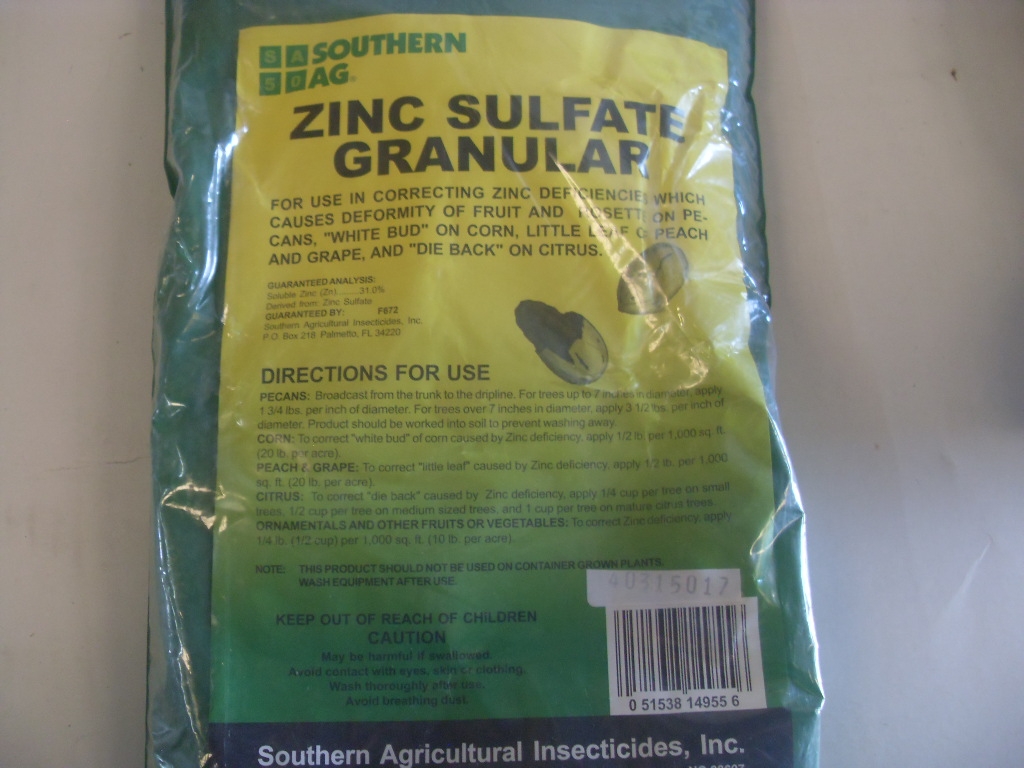
Zinc Sulfate Granular 31% – 5 Lb
Zinc Sulfate Granular 31% – 5 Lb corrects blind nut disorder in Pecans and corrects zinc deficiency (mottleleaf) in avocado, beans, citrus, corn, peaches & nectarines.
Zinc Sulfate Granular 31% – 5 Lb corrects blind nut disorder in Pecans and corrects zinc deficiency (mottleleaf) in avocado, beans, citrus, corn, peaches & nectarines.

Contrac All Weather Blox Rodenticide – 4 x 4 lb Pails is same as Contrac Blox – 18 Lbs pail, but more convenient package as 4 pails.
Bed Bug Facts & Statistics
From the NPMA/University of Kentucky Bugs Without Borders Survey:
95 percent of U.S. based professional pest management companies have encountered a bed bug infestation in the past year.
Use non-chemical control methods to help reduce pest problems. Around the home, such measures include removing sources of food and water (such as leaky pipes) and destroying pest shelters and breeding sites (such as litter and plant debris).
Do not apply a broadcast application to interior surfaces of homes
Do not apply to pets, food crops, or sources of electricity
Firewood is not to be burned for one month after treatment
Use only in well ventilated areas
All Fruits certain diseases/insects/mites Triple Action Neem Oil- 1 oz (2 TBS) per gal
All Nuts certain diseases/insects/mites Triple Action Neem Oil- 1 oz (2 TBS) per gal
Almonds navel orange- worm, twig borer- Permetrol- 3 tsp per gal
Apples- many diseases- Captan Fungicide- 2-4 TBS per gal
many diseases- Liquid Copper (new)- 1 – 6 Tsp per gal
many insects- Malathion 50% EC- 2 tsp per gal
Systemic Fungicide (Bayleton)- 1 – 2 TBS per gal (most uses)
Captan Fungicide- 1 – 2 TBS per gal
Liquid Copper Fungicide- 2 tsp per gal
Dithane M-45- 1.5 TBS per gal
Carbaryl 5% Dust- Ready to Use
Carbaryl 10% Dust (for Woody Ornamentals)- Ready to Use
Cutworm & Cricket Bait- 0.9 lbs per 1000 sq ft
Garden Insect Dust- Ready to Use
Home Pest Control- Ready to Use
Malathion 5% Dust- Ready to Use
Black Spot is a disease that most often infects roses in warm weather and high humidity. Infection mostly occurs from spores splashing up onto the new growth from the fallen leaves and stems. On occasion, the spores can be brought in by air movement. Therefore, removing infected canes and leaves from the area is the best means of pest control. This disease is easy to recognize.
MSMA Update for Turfgrass Applications
Residential and Athletic Field Turf
Effective January 1, 2010, MSMA will no longer be labeled for use on residential turf, drainage ditch banks, railroad, pipeline, and utility rights-of-way, fence rows, storage yards, and similar non-crop areas. Any previously purchased stocks of MSMA products may be applied until December 31, 2010.